

Journalism
Faculty Sponsor: Wafa Unus
School: Fitchburg State University
Research Area: Journalism
Location: Poster Session 4, 2:15 PM - 3:00 PM: Concourse [B12]
Faculty Sponsor: Mary Jo Shafer
School: Northern Essex Community College
Research Area: Journalism
Location: Poster Session 4, 2:15 PM - 3:00 PM: Concourse [B13]
Incarcerated populations contain voices least represented in journalism. There is access to programs that encourage the incarcerated to both find and use their voices, but there are educational barriers in place. The research explores some of the barriers faced by incarcerated individuals in terms of accessing and engaging in journalism as well as what journalism in particular offers to affected populations. The Prison Journalism Project (PJP) and various prison-based publications highlight both areas of strength and need within incarcerated populations, like the specific needs of women as well as the medically complex. Barriers to journalism for the incarcerated are educational shortcomings, inability to access technology in a way that supports prison journalism and various local, state and federal laws curtailing the rights of prison journalists. The research includes studies on prison journalism, explorations of projects that both encourage and promote journalism among the incarcerated like partner programs at University of California at Berkeley, interviews with people involved in different aspects of prison journalism, and legal information about the laws that create further barriers to incarcerated journalists. This project highlights not just PJP but also San Quentin News, from San Quentin State Prison in California; The Prison Mirror, from Minnesota State Prison – Stillwater; and The Angolite, from Louisiana State Penitentiary at Angola.
Faculty Sponsor: Dustin Christensen
School: UMass Amherst
Research Area: Journalism
Location: Poster Session 4, 2:15 PM - 3:00 PM: Concourse [B14]
This is not an uncommon occurrence. Bucky Irving, a running back for the Tampa Bay Buccaneers of the National Football League, missed two games this season following a shoulder injury he was recovering from. Later, he went on to say his shoulder was healed, but he wasn't right with himself because he had been stripped for weeks of the one thing he has dedicated his entire life to.
Many studies show that stripping an athlete from their respective sport spontaneously and unexpectedly can have similar effect on the brain as PTSD from a veteran or institutionalization of a felon trying to reincorporate themselves into society.
My goal is to create an investigative journalism piece and present it to shed light on this issue, and to gather jarring insight from UMass athletes, possibly professional athletes, and experts in the mental health field.
RELATED ABSTRACTS
- The Impact of Foster Care on Children's Mental Health, Caron, Angelia Erika, Fitchburg State University, Poster Session 3, 1:15 PM - 2:00 PM, Auditorium, A72
- Pre-COVID-19 Pandemic vs. During the Pandemic and First vs. Continuing Generation College Students: Perseverative Negative Thinking and Mindful Nonjudging Differentially Mediated the Threat - Depression Relationship, Gage, Ethan Thomas, Worcester State University, Poster Session 2, 11:30 AM - 12:15 PM, 163, C10
- What Is Imposter Syndrome?: The First Generation Experience, Coll, Wileynis Marie, Holyoke Community College, Poster Session 5, 3:15 PM - 4:00 PM, Auditorium, A70
- Life Onboard: Mental Health in the Cruise Industry, Rong, Jennifer dos Santos, Massachusetts Bay Community College, Poster Session 2, 11:30 AM - 12:15 PM, Auditorium, A78
- The Dangers of Adolescent Gambling, Ryan, John Patrick, Northern Essex Community College, Poster Session 3, 1:15 PM - 2:00 PM, Auditorium, A70
Faculty Sponsor: Heesoo Jang
School: UMass Amherst
Research Area: Journalism
Location: Poster Session 5, 3:15 PM - 4:00 PM: Campus Center Auditorium [A79]
This research study examines how student journalists at the Massachusetts Daily Collegian understand, discuss and make decisions about artificial intelligence (AI) in journalism. While studies about how professionals in the industry are adapting to this new technology have begun to emerge, there is little being studied about the next generation of journalists who have grown up with rapid developments in technology. Bringing the discourse of how AI should be used in journalism to the collegiate level, I explore how student journalists in the newsroom make decisions about AI, whether their chosen beat or expertise influences their perspective and what boundaries students, especially student leaders, are enacting to protect journalism's integrity. This study aims to directly benefit the Collegian by providing information on what its members think about AI and how it should be used. The report would inform a comprehensive AI policy for the newsroom, as one currently does not exist. Through the data collected from interviews, this study will spark conversation about the pressing issue of how AI should be used in the newsroom while protecting journalistic integrity and agency. By bringing the issue of AI to the forefront of the college newsroom, I hope to start a much-needed discussion about how we can approach a tool that has potential and pitfalls that have yet to be discovered.
Faculty Sponsor: Heesoo Jang
School: UMass Amherst
Research Area: Journalism
Location: Poster Session 5, 3:15 PM - 4:00 PM: Campus Center Auditorium [A80]
Faculty Sponsor: Heesoo Jang
School: UMass Amherst
Research Area: Journalism
Location: Poster Session 5, 3:15 PM - 4:00 PM: Campus Center Auditorium [A81]
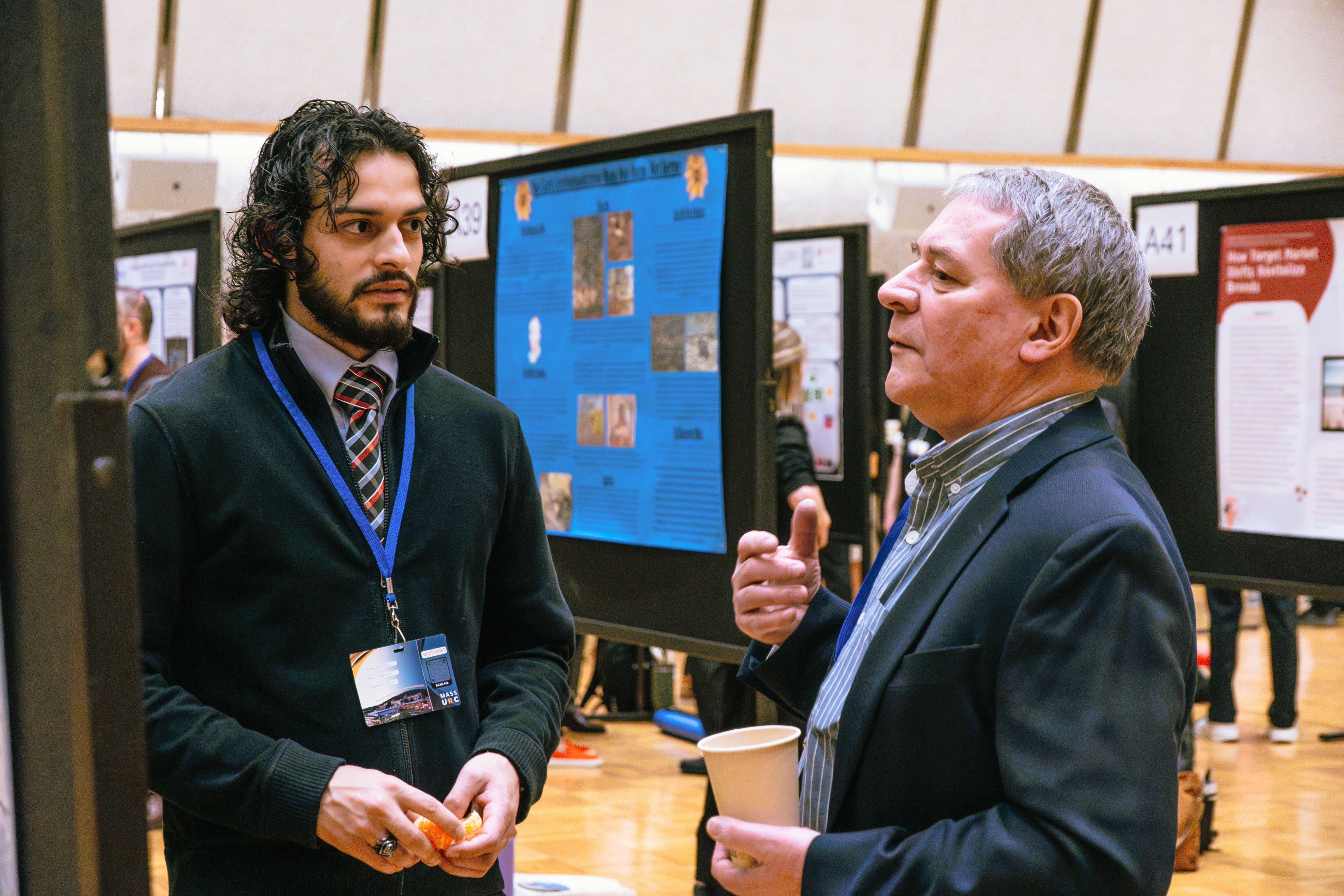
This project was a podcasting collaboration with a junior undergraduate student interested in learning journalism. Fall Semester of 2025, I interned at the University Inclusive Learning department at University of Massachusetts Amherst, where I mentored a student interested in learning about journalism, specifically podcasting. While this started as internship credit for the student, it evolved into a project grounded in individualized instruction, scaffolded mentorship, interest-driven learning. I structured our weekly meetings around accessible pedagogy by breaking down technical audio storytelling terms and structure into digestible and interactive lessons. Introducing terms like nat pops, bed music and reporter tracks while emphasizing the importance of creating scripts in a specific formula. Weekly assignments were balanced so that the student’s social and emotional disabilities were recognized and she felt supported, yet expectations for what could be accomplished were high. Because the student had an interest in ancient literature, the podcast was titled Lives, Lore and Literature, with the first episode focusing on the ancient Germanic poem Nibelungenlied. By the end of the semester we had successfully written, recorded and edited an entire episode. Most importantly, this research emphasizes how accessibility in journalism is very much achievable without changing the rigor in any courses. Adaptability and patience can make technical fields like podcasting become much more inclusive at the collegiate level.
Faculty Sponsor: Heesoo Jang
School: UMass Amherst
Research Area: Journalism
Location: Poster Session 5, 3:15 PM - 4:00 PM: Campus Center Auditorium [A83]
