

Music
Faculty Sponsor: Zaur Rzakhanov
School: UMass Boston
Research Area: Music
Location: Poster Session 2, 11:30 AM - 12:15 PM: Campus Center Auditorium [A50]
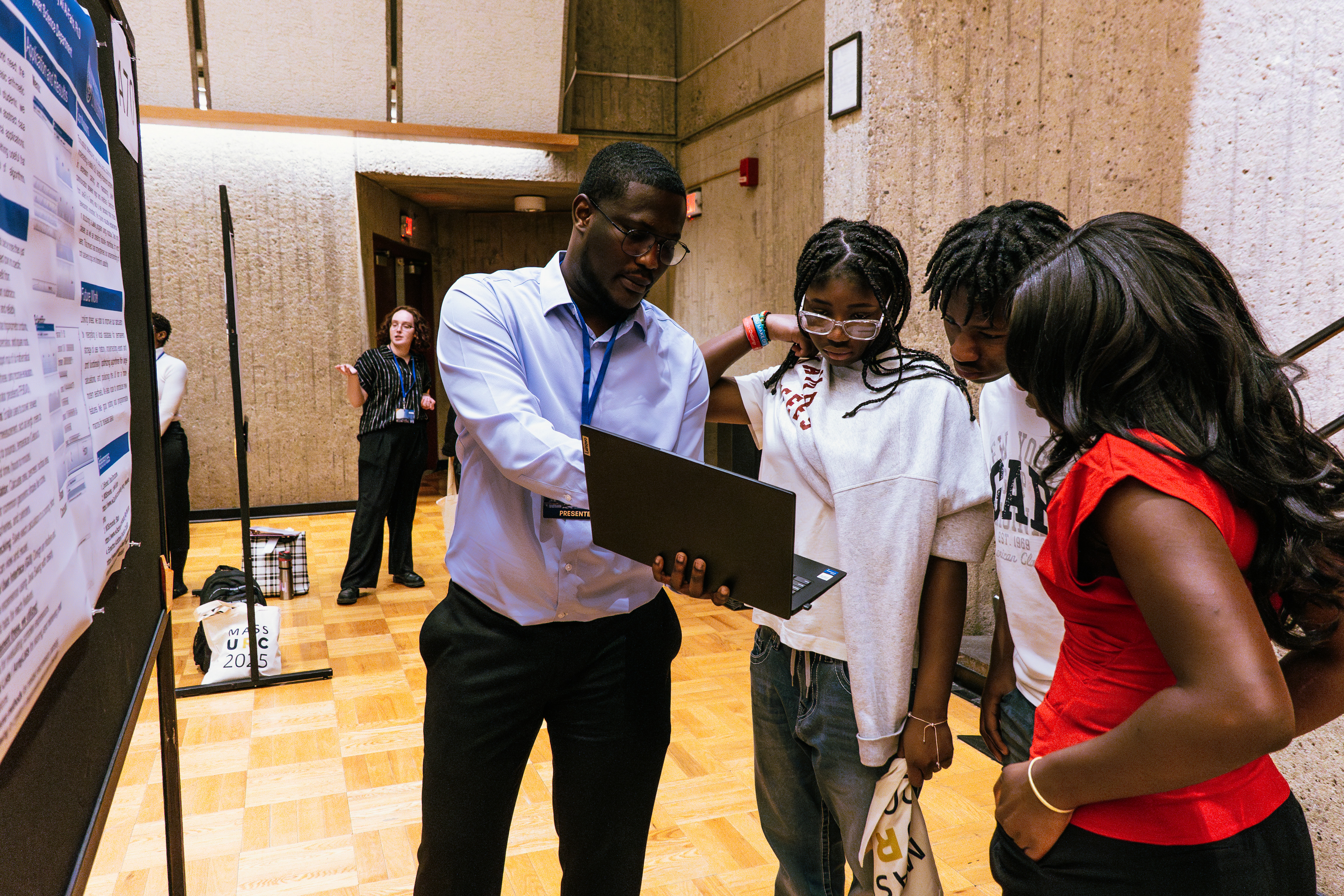
Black history in America is wrought by both innovation and exploitation, often falling under hegemonic whiteness rather than being properly accredited. Black American music has faced a paradox since its inception; the artists found themselves excluded from the mainstream music industry, yet their artistry has been widely acclaimed by white artists, leading to commercial awards and historical recognition. This study examines the racial disparity faced by Black artists in rock music—a genre they pioneered but have been systematically underrepresented in. This research draws on Safiya Noble’s (2018) framework of “algorithms of oppression”. Noble argues that technology is not a neutral tool but rather reflects and amplifies the biases of its creators and the historical data used to train it. Thus, this research tests whether Spotify’s different curation systems perpetuate historical injustices. Data on artist representation will be gathered from 18 rock playlists from each of Spotify’s editorial, algorithmic, and community-curated methods. Each artist’s race will be classified using verifiable, source-cited data. Statistical analysis (i.e., chi-square tests) will determine whether the proportions of Black artists vary significantly between each curation method. The goal is to determine whether digital platforms significantly perpetuate past inequalities, revealing that there is yet to be true neutrality in the logic of algorithms and systemic curation.
Faculty Sponsor: Carolyn Crotty Guttilla
School: Massachusetts Bay Community College
Research Area: Music
Location: Poster Session 2, 11:30 AM - 12:15 PM: Campus Center Auditorium [A82]